
PREFACE
Preface to Seeking Justice in the Catholic Church
by Peter Norden AO
Several years ago, during the extensive period of the COVID lockdowns in Melbourne, I decided to share some personal reflections and observations based on four decades of direct exposure to the workings of the criminal justice system in Australia (Seeking Justice in the criminal justice system in Australia, 2021, 2026).
That publication was distributed to key personnel in state, territory and federal governments circles, and to influential personnel in the wider Australia community, concerned about the more effective working of the criminal justice system across the nation.
My purpose in completing that earlier task was to redress some of the retrograde measures that spread at a rapid pace during the last two decades expanding our prison population, at a time when major violent crime was significantly decreasing in Australia.
This publication has a much broader focus: drawing on my personal experiences in seeking to promote justice through a wider range of involvements over a period of forty years as a Jesuit priest in the Catholic Church, within Australia and beyond.
Again, it is based on my long-term professional experience working at the coalface in the social services, health and public advocacy fields, but its focus is on the many diverse lessons learnt over a period of several decades, in different parts of the world.
Reflecting upon my earlier years closely associated with the Catholic Church, and particularly the Jesuits, an international religious order which has played a significant role in the universal church over five centuries, there is much to share.
My forty years with the Jesuits was a rich experience covering many roles and extending far beyond Australia, from 1968 to 2008.
It is my belief that there are lessons to be learnt, some experiences to be highlighted, and yet some disappointments to be shared.
My experiences over that period of four decades were generally of a positive nature.
But they were not without their disappointments, particularly as the challenges that I responded to as a graduate of a Jesuit secondary college back in 1968, were slowly diminished by the absence of progressive and inclusive leadership within the Catholic Church in the following decades, at both a national and international level.
Critical features of my disappointment were the failure during the following decades to incorporate the role of women in the church and the obvious incapacity of the church authorities to act morally and ethically in response to the worldwide phenomenon of child abuse by members of the clergy and employees of the church.
This publication, certainly, will deal with these issues, as I share some of my insights into the institutional failures of the church in that regard.
My focus in this publication, however, will be constructive, focusing largely on the richness of the experiences of those forty years and highlighting some of the incredible opportunities I had personally, and witnessing some of the wonderful examples of Christian service that I was privileged to observe during that time.
“Ecclesia semper reformanda est”
…. The church is always in need of reform
In these introductory remarks, it is perhaps appropriate for me to present my reasons for resigning from the active priestly ministry back in 2008, after forty years of pastoral service.
When interviewed at the time by prominent media personalities in Australia, including Barney Zwartz, the religious affairs writer for The Age newspaper, 3AW radio host Neil Mitchell and 3LO ABC radio host Jon Faine, and the Australian national channel 7 television news the next day, I presented my reasons quite simply:
I was burnt out, after 40 years of service in demanding fields of ministry, lacking sufficient personal support, disillusioned with the Catholic Church’s response to the child abuse scandals, its continuing exclusion of women from key roles within the church, and regressive changes and the continuing centralisation of power back within Rome.
That Age newspaper article by Barney Zwartz is attached as one of the appendices of this publication.
Almost twenty years later, I am now wanting to share something a lot more positive about my experience of those forty years of active service within the Catholic Church and the Jesuit religious order of which I was a member from the age of 18. These reflections will be personal, but also reflective of the wider changes that occurred during this time.
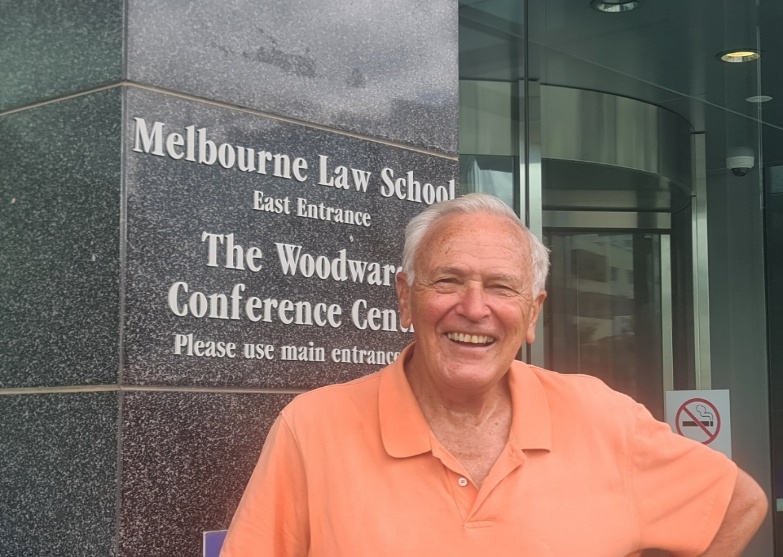
Much of my last twenty years have been university-based, beginning with a three year Vice Chancellor’s fellowship at the University of Melbourne in the Melbourne Law School, then several years as an Adjunct Professor at R.M.I.T. University teaching undergraduate and masters students in the fields of mental health, social policy, legal studies, social work and criminology, and currently appointed as an Honorary Fellow and the recipient of an Honorary Doctorate at Deakin University, in the School of Criminology.
In 2016, I was also pleased to be recognised as one of the inaugural Fellows of the Australian and New Zealand Society of Criminology.
These reflections cover a very wide area of experiences both nationally and internationally. It was only after twenty years with the Jesuits, at the age of 38 in 1988, that I had my first exposure to other cultures and experiences in other parts of the world. I was required to complete my tertianship year, in preparation for Final Vows, some seven years after my ordination in 1981.
1988 was my year of awakening … a year of reflection in action, during which time I escaped the narrower confines of Australia, and the Australian Catholic Church, to be exposed to new challenges and amazing role models in different parts of the world.
Returning to Australia at the beginning of 1989, I had gained a richer perspective on the reality before me. The Jesuits called that process: contemplative in action.
The focus of my life had broadened over time, and I extended my involvements in both church and civil society organisations. I also had extensive experiences dealing with state and federal Australian governments and was involved with several international organisations concerned with human rights and law reform.
My forty years with the Australian Jesuits versed me well in observation and reflection on human experience, in social research and public advocacy and human rights activity. For that I am deeply appreciative. But with that heritage comes consequent responsibilities, to continue to reflect on what changes are needed, both in civil society and within the church.
The diverse range of shared experiences and observations contained in this publication call for action to bring about reform and progressive change more broadly within our Australian society, but also within the realm of the Catholic Church itself.
It is not biographical, but this publication does narrate and provide reflections on key experiences from different stages of my life.
The narrative approach that I have adopted is recognised as what is known as “heuristic research”, where the writer draws upon personal experience and reflection to explore a topic more deeply, using his own insights as a key element of understanding and consideration.
What I consider in this publication are a range of concerns and involvements that I have personally experienced, in various parts of the world, over the last four decades. I hope that it encourages others not to lose hope in this ambitious endeavour: seeking justice and peace in our divided world.
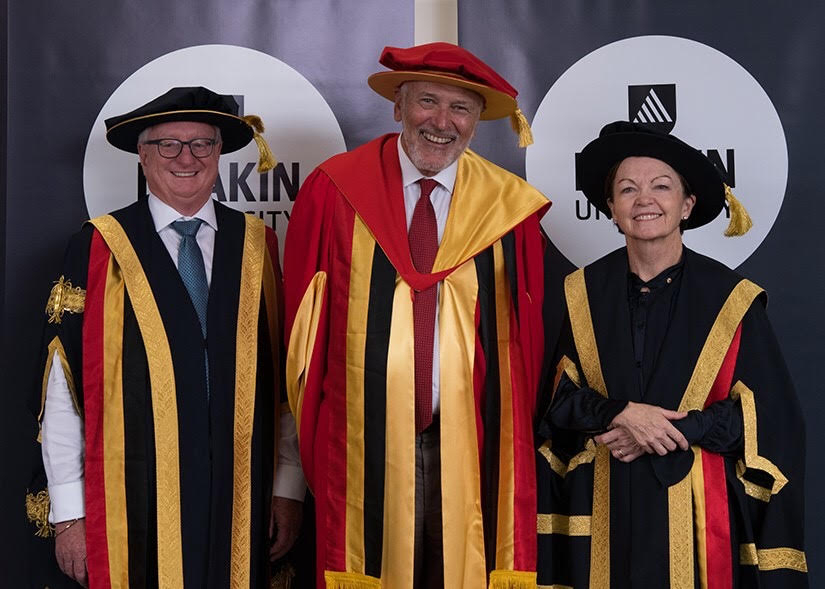
Receiving an Honorary Doctorate from Deakin University …for eminent and sustained service to the Australian non-government sector in the field of community services. February
